

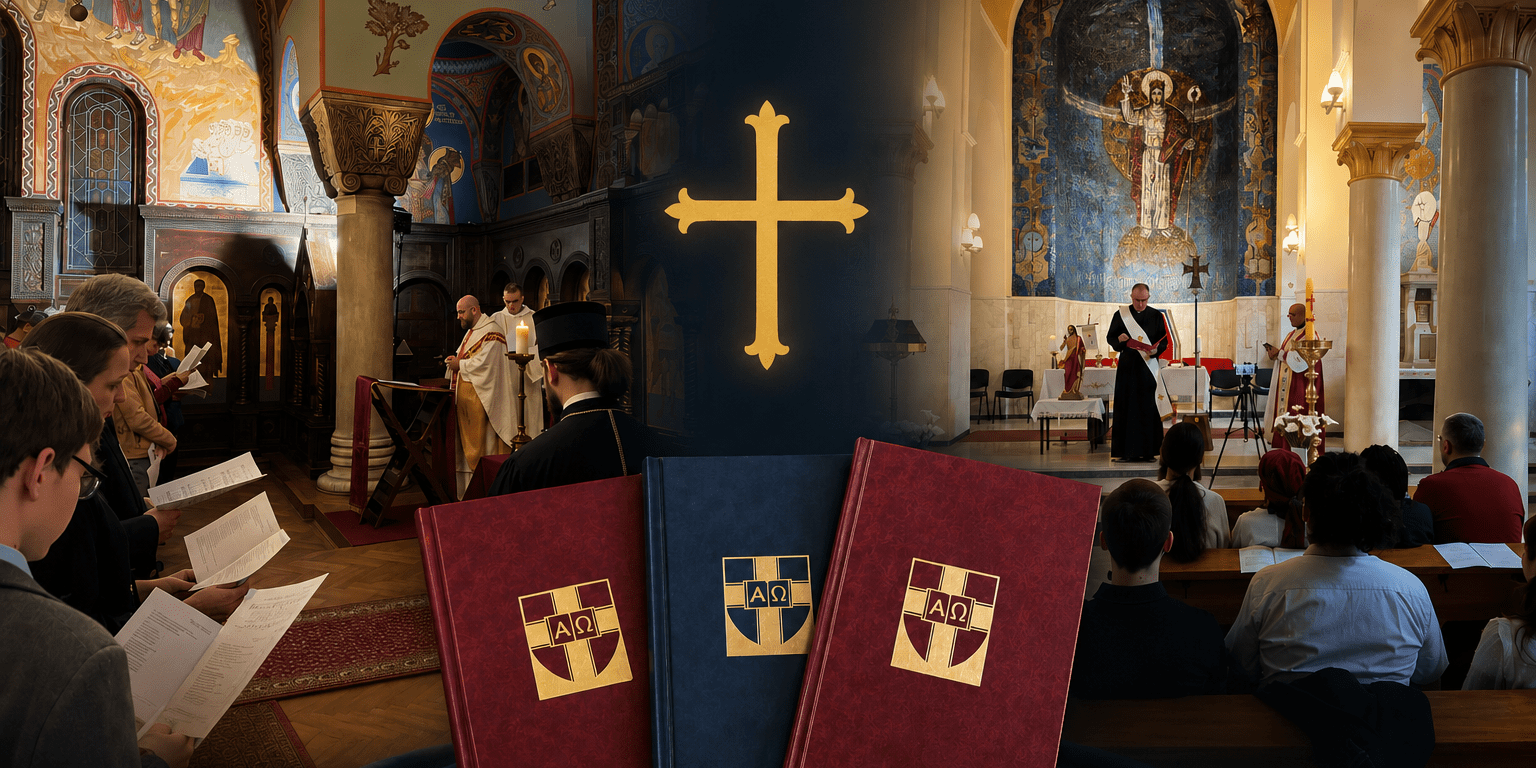
When speaking about the Anglican Church, it is important to clarify a common misconception from the outset: Anglicanism does not refer only to the Church in England, nor are Anglicans exclusively English. Today, the Anglican tradition consists of more than forty church provinces throughout the world. In an Orthodox context, these provinces could be compared to autocephalous churches. Contemporary Anglicanism is a global Christian communion in which there are now considerably more believers of non-English origin than English ones.
To be an Anglican, therefore, does not mean belonging to a particular nation or ethnicity, but to a Christian tradition that traces its historical origins to the See of Canterbury as far back as the sixth century. The Church of England is the “mother church” of all Anglican churches, but today it is only one of many Anglican provinces around the world.
The Anglican Church in Serbia
Today, two internationally recognized Anglican jurisdictions are active in Serbia: the Church of England, which belongs to The Anglican Communion, and the Reformed Episcopal Church, which belongs to the Global Anglican Future Conference (GAFCON), a worldwide fellowship of orthodox Anglican churches.
The Church of England in Serbia
Relations between Serbia—particularly the Serbian Orthodox Church—and the Church of England developed especially during and after the First World War. During this period, Bishop Nikolaj Velimirović played a significant role in fostering close ties with Anglican church leaders in England. His relationships with the Bishop of London and other prominent Anglican bishops helped establish a deep mutual respect between the Serbian Orthodox Church and the Anglican tradition.
Following the immense suffering of the Serbian people during the First World War, the Church of England and numerous Anglican charitable organizations provided substantial humanitarian assistance to Serbia and Serbian refugees. As a sign of gratitude and the strong relationship between the two churches, the Serbian Orthodox Church has, on certain major feast days, made the Patriarchal Chapel available for Church of England services.
Today, the Church of England congregation in Belgrade holds its services at the Roman Catholic Church of St. Peter the Apostle on Makedonska Street. The parish is known as St. Mary’s Church, and its priest, Robin Fox, also serves as the Apokrisiarios of the Archbishop of Canterbury for Serbia and the wider region.
Over the past several decades, the Church of England has undergone significant internal developments. Among these has been the ordination of women, first as priests and later as bishops. Today, women serve as bishops throughout the Church of England, including in senior episcopal offices. Following the resignation of Justin Welby as Archbishop of Canterbury, Sarah Mullally, formerly Bishop of London, was elected and enthroned as Archbishop of Canterbury.
In recent years, the Church of England has also introduced provisions for pastoral prayers and blessings for same-sex couples, while officially maintaining that Christian marriage is the lifelong union of one man and one woman. These issues have generated considerable debate throughout the Anglican world and remain among the principal causes of division between more liberal and more traditional Anglican jurisdictions.
The Reformed Episcopal Church
The Reformed Episcopal Church has been officially active in Belgrade since 2011. The Reformed Episcopal Church in America is a member of the Anglican Church in North America (ACNA) and participates in the wider GAFCON movement. Although the congregation had existed since 2007, it received official recognition from the Reformed Episcopal Church in the United States in 2011.
Unlike the Church of England, the Reformed Episcopal Church maintains more traditional theological positions. It does not ordain women to any order of ministry—whether as deacons, presbyters (priests), or bishops. Likewise, it teaches that marriage is exclusively the union of one man and one woman and does not provide ecclesiastical blessings for same-sex unions, believing such practices to be inconsistent with historic Christian teaching and the biblical understanding of marriage and human sexuality.
As part of the wider GAFCON fellowship, the Reformed Episcopal Church cooperates with numerous traditional Anglican provinces around the world. Within GAFCON there are certain differences among member jurisdictions: some permit the ordination of women as deacons or presbyters, while others do not. However, there is broad agreement throughout GAFCON that the ordination of women to the episcopate is not acceptable.
Since its establishment in Belgrade, the Reformed Episcopal Church has cultivated positive ecumenical relations with the Serbian Orthodox Church, the Roman Catholic Church, and other historic Protestant and evangelical churches.
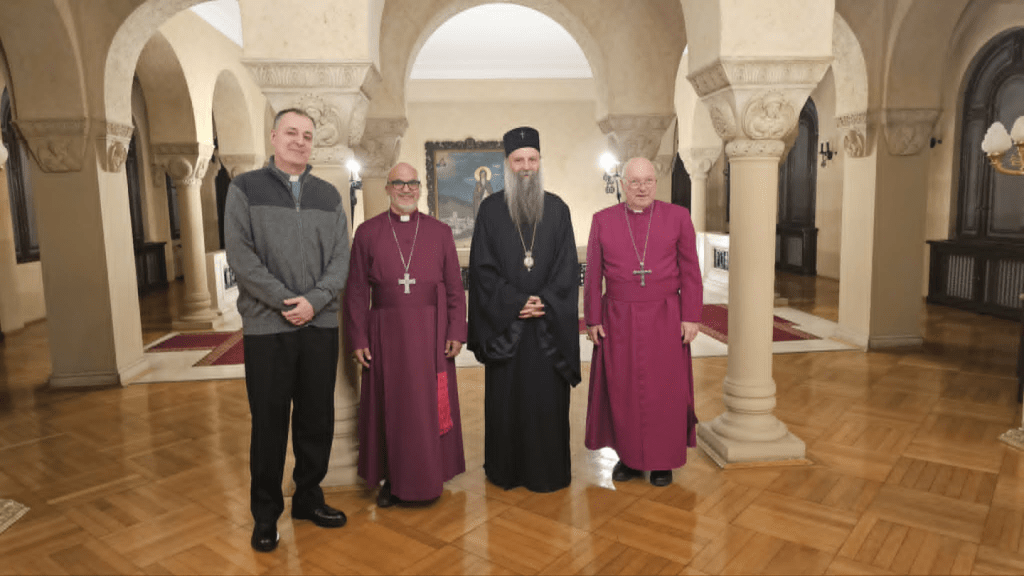
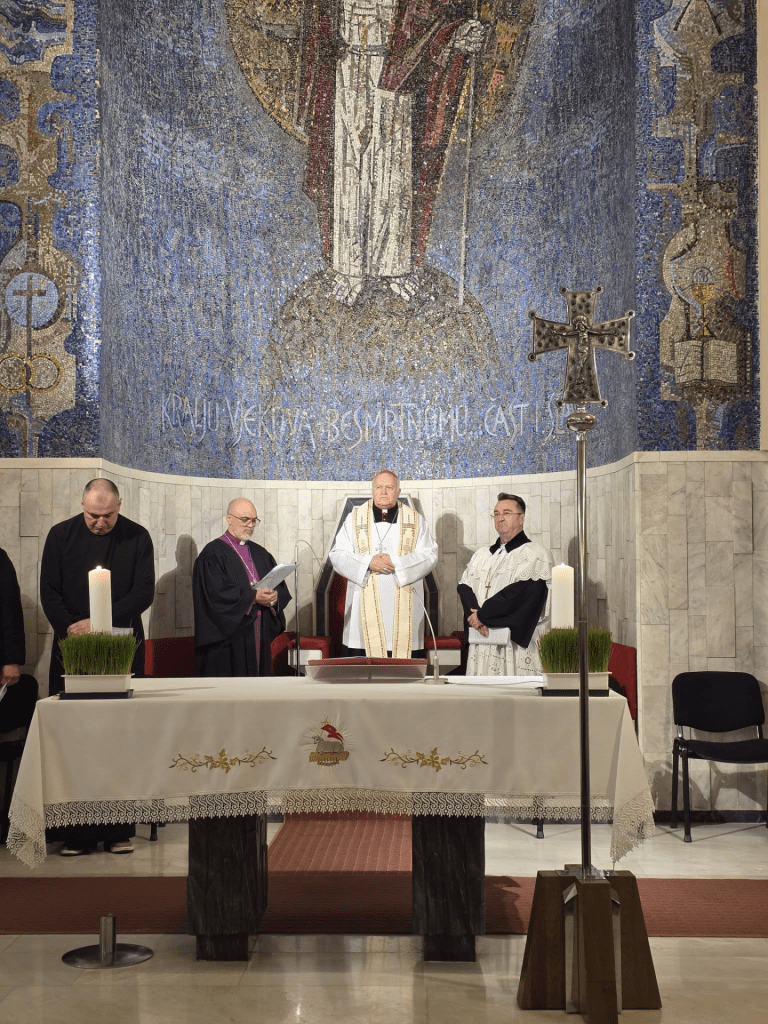
Through the generosity of the Archdiocese of Belgrade, the congregation has worshipped in several Roman Catholic churches over the years, including the Caritas Chapel on Višegradska Street, the Church of St. Anthony in Karaburma, and, in recent years, the Church of Christ the King on Krunska Street.
The Church is officially registered in Serbia, and the Anglican Theological Institute also operates alongside it.
Relations Between the Two Anglican Jurisdictions
Although they belong to different international bodies—the Anglican Communion and the GAFCON movement—the two Anglican jurisdictions in Serbia maintain mutual respect.
It is important to note that in 2017 the Church of England recognized the validity of the priestly ordinations of the Anglican Church in North America (ACNA), of which the Reformed Episcopal Church is a founding member. Although there remain substantial disagreements on various theological and moral issues, this recognition confirms that the two churches do not regard one another as non-church bodies.
Individuals Claiming to be “Anglican Clergy” Outside Recognized Anglican Churches
There are also individuals in Serbia who describe themselves as “Anglican bishops,” “archbishops,” or “Anglican priests.” However, the groups they claim to represent are not in communion with any officially recognized Anglican province belonging either to The Anglican Communion or to GAFCON. Consequently, they are not regarded by the historic Anglican churches as canonical Anglican jurisdictions or as part of historic Anglicanism.
Conclusion
The Reformed Episcopal Church seeks to combine faithfulness to the ancient catholic tradition of the Church with the heritage of the Protestant Reformation. It preserves the classical Anglican liturgical tradition centered on the Book of Common Prayer, upholds the Thirty-Nine Articles of Religion, and maintains episcopal church government together with apostolic succession, as shared by the historic Anglican churches.
The Church places great importance on the sacraments, the teaching of the Church Fathers, and continuity with the historic Church of the first centuries. At the same time, its theology clearly embraces the principles of the Reformation, emphasizing the supreme authority of Holy Scripture, salvation by grace through faith, and the classic Reformed understanding of the Christian faith.
Despite its traditional identity, the Church welcomes all who wish to explore Anglican spirituality, liturgy, and theology.
Those wishing to learn more about the teaching and tradition of the Reformed Episcopal Church are welcome to contact the Church by email at recsrbija@gmail.com or visit its official website: episkopalnacrkva.com.
Finally, it should be emphasized that today the majority of active Anglicans worldwide belong to the more traditional provinces associated with GAFCON. This fellowship includes some of the largest Anglican churches in the world, particularly in Africa, Asia, and South America, and the Reformed Episcopal Church is in full communion with them.

